Health and Safety Policy for Landscaping Newcross
 Landscaping Newcross is committed to maintaining a safe, healthy, and well-managed working environment for all employees, contractors, clients, and members of the public affected by our activities. This policy sets out the standards and responsibilities that support safe landscaping operations across every stage of work, from site preparation to completion. We recognise that landscaping work can involve moving materials, using powered equipment, working outdoors in changing conditions, and handling tasks near access routes, all of which require careful planning and consistent control measures.
Our approach to health and safety in landscaping is based on prevention, supervision, and continuous improvement. We aim to identify hazards early, reduce risk where reasonably practicable, and ensure that everyone involved in our work understands the safe systems they must follow. This policy applies to all landscaping activities, including planting, turfing, pruning, hard landscaping, ground preparation, waste handling, and the use of machinery and hand tools.
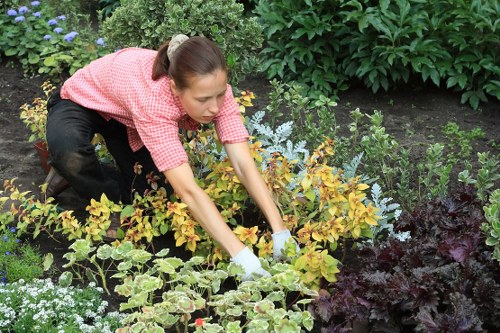 The management team has overall responsibility for ensuring that health and safety arrangements are suitable and that resources are available to support safe working. Site supervisors are expected to enforce procedures, check equipment, and respond quickly to unsafe conditions. Employees and subcontractors must take reasonable care of their own safety and the safety of others, report hazards promptly, and cooperate with instructions and training. Safety is everyone’s responsibility, and it depends on shared commitment at every level.
Before work begins, a suitable risk assessment will be completed for each project or task. The assessment will consider site access, ground conditions, weather, slopes, overhead obstacles, buried services, traffic movement, lifting tasks, exposure to noise or dust, and the presence of the public or vulnerable persons. Control measures may include cordons, signage, traffic management, tool checks, manual handling controls, and the selection of appropriate personal protective equipment. Work must not proceed if risks cannot be controlled adequately.
Safe use of equipment is essential in all landscaping operations. All tools, plant, and machinery must be suitable for the task, maintained in good working order, and used only by trained or authorised personnel. Guards and safety devices must never be removed or bypassed. Workers should inspect equipment before use and remove defective items from service immediately. Powered equipment such as mowers, trimmers, compactors, and cutters must be operated in line with manufacturer instructions and site-specific controls.
Manual handling presents a common risk in landscaping work, particularly when moving soil, paving materials, plants, or waste. Where possible, tasks should be planned to avoid unnecessary lifting or carrying. Mechanical aids, team lifts, and shorter routes should be used to reduce strain. Staff must use correct posture, avoid twisting while lifting, and request assistance when loads are heavy, awkward, or unstable. The company will provide information and training to support safer movement of materials.
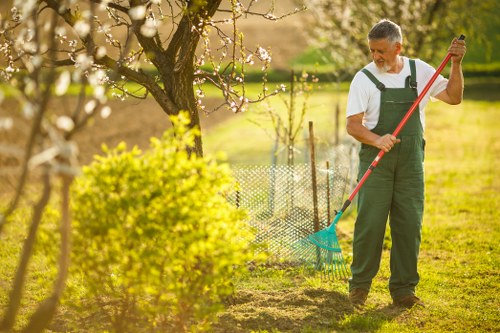 Working outdoors introduces additional risks linked to weather, visibility, and changing site conditions. In hot weather, staff should stay hydrated, take breaks, and use sun protection. In cold or wet weather, suitable clothing, footwear, and rest arrangements must be in place. Tasks may be paused during high winds, lightning, poor visibility, or slippery conditions if safe working cannot be maintained. Seasonal planning is important to ensure that landscaping safety remains effective throughout the year.
Attention must also be given to environmental and biological hazards. Soil, compost, vegetation, and standing water can expose workers to bacteria, fungi, insects, and allergens. Cuts and punctures should be cleaned and covered immediately to reduce the risk of infection. When handling certain plants, chemicals, or treated materials, employees must follow the relevant instructions and wear the required protective gear. Good hygiene, including hand washing and proper disposal of contaminated waste, is an important part of our control measures.
Emergency arrangements will be maintained for foreseeable incidents such as cuts, crush injuries, slips, heat stress, and contact with machinery. First aid supplies must be available and maintained, and workers should know the procedures for reporting incidents and seeking assistance. Access routes for emergency response must remain clear at all times. Any accident, near miss, or unsafe occurrence must be recorded and investigated so that lessons can be learned and future risks reduced.
Training, supervision, and communication are central to this policy. New employees and contractors will receive information on relevant risks, control measures, emergency arrangements, and expected standards of conduct before starting work. Refresher training will be given where tasks, equipment, or site conditions change. Supervisors will monitor performance and intervene when unsafe practices are observed. No one should feel pressured to work unsafely or continue if a condition becomes dangerous.
Personal protective equipment, when required, must be worn correctly and kept in good condition. Depending on the task, this may include safety footwear, gloves, eye protection, hearing protection, high-visibility clothing, or respiratory protection. PPE is the final layer of defence and does not replace proper planning or safe methods of work. Reliable landscaping safety practice depends on combining PPE with equipment checks, good housekeeping, and respectful site behaviour.
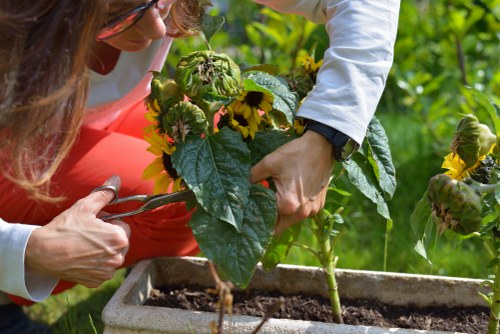 We also expect all work areas to be kept tidy and organised. Waste materials, offcuts, trailing leads, and loose tools can create slips, trips, and other avoidable injuries. Materials should be stored securely, and work zones should be arranged to prevent unauthorised access wherever practical. When working near roads, paths, or occupied premises, additional barriers, spotters, or timed work sequences may be used to protect others.
Management will review this policy regularly to make sure it remains effective and relevant. Reviews will take account of incident trends, changes in work methods, new equipment, legal requirements, and feedback from internal inspections. Where improvements are identified, action will be taken without delay. The objective is not only compliance, but a lasting culture of care, awareness, and accountability across all landscaping activities.
Everyone involved in Landscaping Newcross is expected to support these standards and contribute to safer working conditions. By planning carefully, using the right controls, and staying alert to changing risks, we can deliver landscaping work in a way that protects people and property while maintaining quality and professionalism.
 This policy is part of our ongoing commitment to responsible practice in landscaping health and safety. It should be read alongside task-specific procedures and site rules that apply to each project, ensuring that safety remains an integral part of every decision, every day.